Anion Gap Calculator: A Handbook for Lab Professionals
What the Anion Gap Shows
The anion gap is a valuable calculated value from the electrolyte panel that supports laboratory professionals aid acid-base interpretation and overall serum chemistry review. It reflects the anionic difference between routinely measured cations and anions, frequently using serum sodium, serum chloride, and serum bicarbonate. Although the result is computed rather than directly measured, it provides valuable insight into electrolyte balance and the patient’s physiologic state.
From a laboratory perspective, the anion gap is best viewed as a screening tool that provides diagnostic support rather than a standalone diagnosis. Changes in the gap can point to an acid-base disorder, especially metabolic acidosis, and may prompt closer review of the specimen, the analytical context, and the full chemistry profile. Because the value depends on several measured analytes, it is also sensitive to analytical variation and preanalytical factors that affect specimen integrity.
In routine practice, the anion gap helps relate a chemistry result to a broader clinical picture. It can flag a possible metabolic disturbance, guide the need for reflex review, and assist with result interpretation when a panel appears discordant. For laboratory professionals, its value lies not only in the number itself, but in the pattern recognition it supports across the entire serum chemistry profile.
How to Use an Anion Gap Calculator
An anion gap calculator streamlines the calculation method by following the standard equation to the analytes entered from the electrolyte panel. In many workflows, the user inputs sodium, chloride, and bicarbonate values, and the calculator produces the derived gap immediately. This is useful for rapid review during laboratory analysis, validation, or post-analytic interpretation.
Before entering results, confirm that the values are from the same specimen and the same reportable set. A discrepancy in sample timing or a specimen with compromised integrity can skew the final number. Good practice commences with checking the source data, ensuring that the values are consistent, and verifying whether the result https://anion-gap-reference004.opalvector.com/posts/anion-gap-calculator-for-methylmalonic-acidemia should be interpreted against the local reference interval used by the laboratory.
A calculator is very helpful when reviewing multiple panels or when comparing current results with prior values. It supports faster identification of abnormal trends and can help the laboratory professional recognize whether the pattern is compatible with metabolic acidosis, high anion gap metabolic acidosis, or a possible nonpathologic shift. In practice, the calculator serves as a structured aid for acid-base interpretation and standardized reporting guidance.
For accurate use, remember these steps:
- Check the correct serum sodium, serum chloride, and serum bicarbonate values.
- Review for unit consistency and transcription accuracy.
- Determine whether the laboratory uses an uncorrected or albumin-adjusted approach.
- Interpret the output in context with the full electrolyte panel and associated findings.
Anion Gap Formula and Calculation Methods
The standard anion gap formula is usually written as sodium minus the sum of chloride and bicarbonate: Na − (Cl + HCO3). This produces the uncorrected anion gap, which is the usual value listed in many chemistry processes. Some laboratories also calculate a variant that includes potassium, but sodium-based calculation remains the common starting point for routine review.
The calculated value should always be reviewed relative to the laboratory’s reference range or reference interval, since method-specific differences and analyzer platforms can shift expected values. An interval that is appropriate for one instrument or population may not match another. For this reason, laboratory professionals should align the interpretation with local validated limits rather than applying a generic cutoff without review.
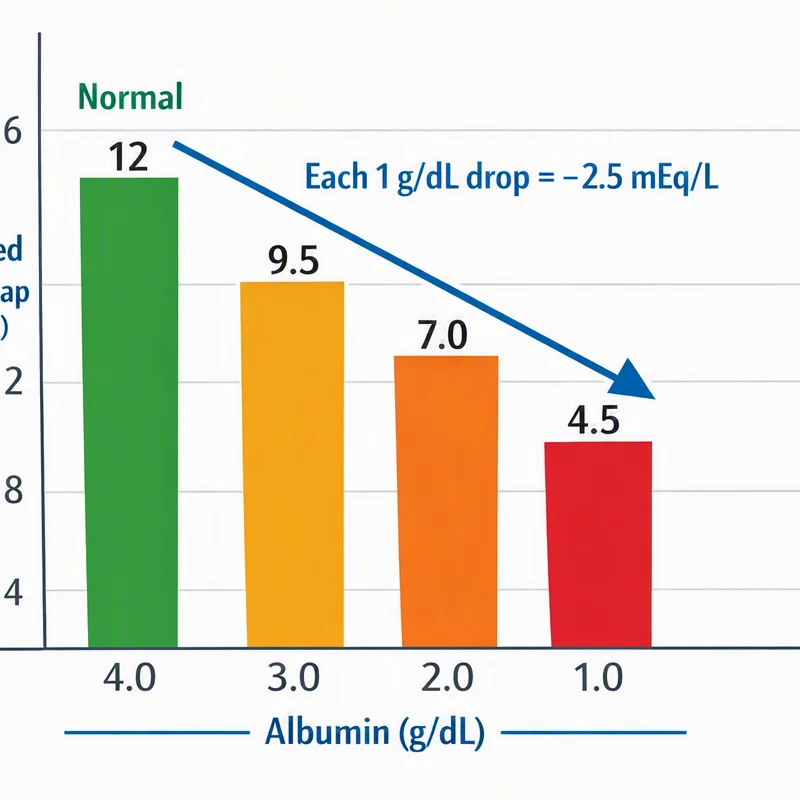
Albumin correction is a important part of the calculation conversation. Because albumin is a major unmeasured anion, reduced albumin can lower the measured gap and hide an underlying disturbance. The albumin-corrected anion gap helps compensate for this effect and can improve interpretive accuracy, especially when hypoalbuminemia is present. In those settings, a normal uncorrected value may not represent the true acid-base picture.
From a laboratory standpoint, the choice between uncorrected and corrected reporting should be directed by local policy, analytic capabilities, and clinician needs. A clear note in the report can improve clinical correlation, especially when the corrected value changes the interpretation from normal to abnormal. The corrected value is not a replacement for judgment, but it gives a more complete picture for laboratory analysis and downstream review.
Interpreting High and Low Anion Gap Results
A elevated result is usually associated with high anion gap metabolic acidosis, a finding that points to accumulation of unmeasured acids. This finding is a key indicator of metabolic acidosis and requires review of the rest of the chemistry profile, the patient context, and any available confirmatory testing. Typical causes include organic acid accumulation, impaired clearance, or toxin-related processes, depending on the broader clinical picture.
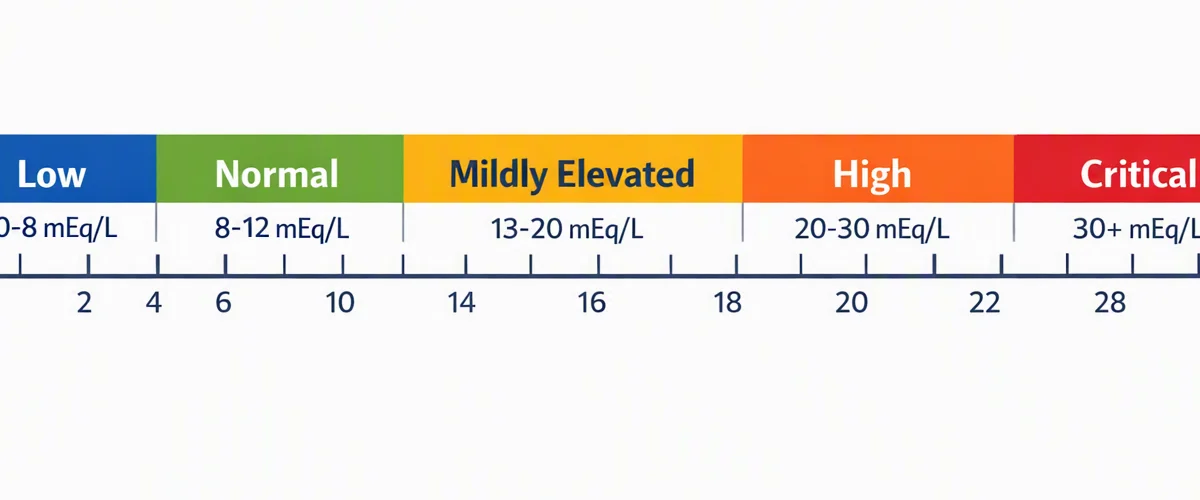
A low anion gap is less common and should call for careful evaluation for analytic or physiologic explanations. Because the value is derived, a low result can reflect altered albumin concentration, increased unmeasured cations, or laboratory error. Before assigning meaning, laboratory professionals should verify the original measurements and consider whether specimen or instrument issues could explain the finding.
Interpretation should focus on pattern recognition rather than a single cutoff alone. A moderate elevation may be important in one context and less significant in another, particularly if the patient has an expected shift in acid-base disorder. Likewise, a low value may be actionable if it fits with other chemistry findings, but may also be a clue to reassess the dataset for preanalytical or analytic issues.
In laboratory practice, an abnormal anion gap should be interpreted as a result-pattern problem first and a disease label second.
When the result appears inconsistent with the rest of the profile, compare with prior values, verify instrument performance, and consider whether the discrepancy is due to laboratory error or a true change in the patient’s physiologic state. This approach supports more reliable result interpretation and better communication with the care team.
Frequent Causes of Abnormal Results
Various disorders are commonly connected to an elevated gap. Lactic acidosis is among the most frequent causes and generally suggests poor oxygen delivery, changed perfusion, or physiologic stress. Ketoacidosis can also elevate the gap due to the accumulation of ketone bodies, while renal failure may play a role through decreased acid removal and accumulation of unmeasured anions.
For decreased results, hypoalbuminemia is one of the key considerations because decreased albumin reduces the measured gap. This is why the albumin-corrected anion gap matters in routine practice. If albumin is significantly reduced, the uncorrected value may seem normal or low even when the underlying metabolic picture is abnormal.

Additional abnormal patterns may be due to medication effects, specimen contamination, or unusual electrolyte shifts. In a lab setting, it is helpful to keep the differential broad and to avoid mislabeling a disease state from the gap alone. The anion gap is best used as part of a systematic review of the electrolyte panel, the patient’s chemistry history, and any related blood gas or metabolic findings.
- Lactic acidosis: frequently connected with increased acid production or reduced clearance.
- Ketoacidosis: associated with ketone accumulation and an elevated gap.
- Renal failure: associated with retained unmeasured acids.
- Hypoalbuminemia: may lower the observed gap and hide abnormality.
Factors Influencing Accuracy in the Laboratory
Precision depends greatly on sample handling, because lags, cross-contamination, hemolysis, or specimen mix-ups can distort the values used in the calculation. Protecting specimen integrity is essential when reviewing any derived measurement. A reliable anion gap begins with reliable source data.
Analytic variation can also affect the result, notably because the equation depends on multiple separate measurements. Even modest variation in sodium, chloride, or bicarbonate can change the calculated gap. That is why instrument-specific performance and method consistency count when interpreting an out-of-range result.
The ion selective electrode method used for electrolyte measurement deserves special attention. Different platforms may show small bias in chloride or sodium measurement, and those differences can affect the final calculation. Laboratory professionals should understand their platform’s behavior and review any unexpected result in light of the analyzer’s known characteristics.
Quality control is central to accurate reporting. Routine QC checks, calibrations, and correlation review help reduce the chance that an erroneous measurement will propagate into the calculated gap. When a result seems discordant, confirm that QC is in range, review recent maintenance or reagent changes, and consider whether the value may be affected by analytical drift.
Because the anion gap is a derived value, it is particularly vulnerable to cumulative small errors. Careful review of method, specimen, and control data helps ensure that the output supports accurate diagnostic support rather than introducing noise into the clinical record.
Recommended Approaches for Presenting and Clinical Communication
Accurate lab reporting should display the anion gap in a way that enables immediate clinical correlation. If your laboratory reports the calculated value automatically, ensure that the accompanying note or interpretive comment matches the local reference range and any method-specific caveats. Clear communication reduces the risk that the result is overinterpreted or overlooked.
When the value is critically abnormal or strongly suggestive of a significant acid-base disturbance, follow established policies for critical values or urgent notification. Not every abnormal anion gap requires immediate escalation, but results that align with severe metabolic acidosis or a major shift in the chemistry profile may warrant prompt communication depending on local policy.
A useful interpretive approach includes review with prior results, review of the full panel, and consideration of the delta gap when clinically relevant. The delta gap can help determine whether an additional acid-base process may be present, offering a more nuanced view of complex disorders. This is particularly helpful when the pattern suggests more than one disturbance or when the numbers do not fit a simple one-process explanation.
Effective reporting guidance should also note whether the value is corrected for albumin. If the laboratory provides both uncorrected and corrected results, the report should make the distinction clear so that clinicians can perform accurate result interpretation. Transparent reporting improves trust and encourages more consistent decision-making.
Laboratory professionals add value when they frame the anion gap as a context-driven metric rather than a standalone answer. By combining method awareness, analytical review, and thoughtful communication, the laboratory can strengthen the clinical utility of this common chemistry-derived marker.
FAQ About Anion Gap Calculation
What exactly is an anion gap calculator used for in laboratory practice?
An anion gap calculator is used to calculate the anion gap from an electrolyte panel and aid in acid-base interpretation. In routine lab work, it helps professionals review patterns consistent with metabolic acidosis, check electrolyte balance, and deliver diagnostic support during result review and reporting.
How is calculated the anion gap from sodium, chloride, and bicarbonate?
The standard anion gap formula is sodium minus the sum of chloride and bicarbonate, expressed as Na − (Cl + HCO3). Using serum sodium, serum chloride, and serum bicarbonate, the calculation yields the uncorrected anion gap. The value should then be evaluated against the laboratory’s reference interval.
When should albumin correction be applied to the anion gap?
Albumin correction should be applied when albumin is low, especially in hypoalbuminemia, because reduced albumin can hide an elevated gap. The albumin-corrected anion gap provides a more accurate corrected value for interpretation when the clinical context suggests that the uncorrected value may be misleading.
What can a high anion gap indicate?
A high result often indicates high anion gap metabolic acidosis, which is a form of metabolic acidosis caused by accumulation of unmeasured acids. Common associations include lactic acidosis, ketoacidosis, and renal failure. As always, the result should be interpreted with clinical correlation and the full chemistry profile.
Could a low anion gap be caused by laboratory error?
Yes. A low anion gap can result from laboratory error, including issues related to specimen handling, analyzer performance, or analytical variation. Before reporting a clinically significant interpretation, laboratory professionals should verify the measurements, review quality control, and consider whether the result is supported by the rest of the serum chemistry data.